Best Probiotic for IBS: What the Research Actually Shows | Grisso
Aug 6, 2026 Grisso Wellness TeamIf you have IBS, you've probably had this experience: your doctor tells you to "try probiotics," hands you a vague recommendation, and sends you on your way. You go to the pharmacy, stare at a wall of bottles with confusing Latin names and wildly different CFU counts, and leave with whatever was on sale.
Three months later, you feel exactly the same. You conclude probiotics don't work.
But here's what likely happened: you took the wrong strain.
IBS is not a single condition, and not all probiotics work for it. Research shows that specific strains help specific IBS symptoms, while others do nothing at all. The difference between feeling better and feeling nothing often comes down to choosing the right bacteria for your specific IBS type.
This guide breaks down what the clinical research actually shows — no marketing fluff, just evidence.
Understanding IBS: Why One Probiotic Can't Fix Everything
Irritable Bowel Syndrome (IBS) affects approximately 10-15% of the global population, making it one of the most common digestive disorders worldwide. It's characterized by:
- Abdominal pain or cramping (often relieved by bowel movements)
- Bloating and gas
- Changes in bowel habits (diarrhea, constipation, or alternating between both)
- Food sensitivities that come and go
IBS is categorized into four subtypes:
| IBS Type | Description | Prevalence | |----------|-------------|-----------| | IBS-C | Predominantly constipation | ~33% | | IBS-D | Predominantly diarrhea | ~33% | | IBS-M | Mixed (alternating) | ~33% | | IBS-U | Unclassified | ~1% |
Different IBS subtypes involve different underlying mechanisms — gut motility issues, visceral hypersensitivity, low-grade inflammation, and microbiome dysbiosis. This is why a probiotic strain that helps IBS-D (diarrhea) might worsen IBS-C (constipation), and vice versa.
What the Research Shows: Strains That Actually Help IBS
1. Bacillus coagulans (Spore-Forming Probiotics)
Bacillus coagulans — the strain family we use in all Grisso products (specifically our BC99™ strain) — has accumulated significant clinical evidence for IBS and functional digestive complaints.
A systematic review published in Beneficial Microbes (2021) analyzed multiple randomized controlled trials of Bacillus coagulans for IBS and found:
- Significant reduction in abdominal pain — participants experienced measurable decreases in pain scores compared to placebo
- Improved bloating scores — the spore-forming nature of this strain means it survives stomach acid and reaches the intestines intact, which may explain its effectiveness for gas-related symptoms
- Bowel movement normalization — beneficial for both IBS-C and IBS-D patients, as the strain appears to regulate motility rather than push it in one direction
- Reduced inflammatory markers — fecal calprotectin levels decreased, suggesting reduced gut inflammation
The mechanism is unique among probiotics: Bacillus coagulans forms spores that survive gastric acid (where most Lactobacillus strains lose 90%+ viability), germinate in the small intestine, and produce lactic acid that lowers intestinal pH. This acidic environment favors beneficial bacteria and suppresses harmful, gas-producing species.
Our G-Sylph formula contains 100 billion CFU of BC99™, specifically targeted at digestive regularity and bloating — two of the most common IBS complaints.
2. Bifidobacterium Species
Several Bifidobacterium strains have shown promise for IBS, particularly:
- B. infantis 35624: One of the most studied strains for IBS. A landmark study in Gastroenterology (2005) showed it significantly reduced abdominal pain, bloating, and bowel dysfunction in IBS patients compared to placebo.
- B. longum: Shown to reduce anxiety scores in IBS patients, supporting the gut-brain connection theory.
- B. animalis DN-173 010: Demonstrated effectiveness for IBS-C, improving transit time and reducing discomfort.
3. Lactobacillus Species
- L. rhamnosus GG: Mixed results; some studies show benefit for IBS-D, particularly in children.
- L. plantarum 299v: Shown to reduce abdominal pain and bloating in some IBS patients.
- L. acidophilus: The most commonly available strain, but clinical results for IBS have been inconsistent. Many commercial probiotics rely heavily on this strain because it's cheap to produce, not because it's the most effective.
4. Multi-Strain Blends
Some research suggests multi-strain formulations may outperform single-strain products for IBS. However, this isn't universally true — a poorly designed blend can actually compete internally, with strains inhibiting each other. Quality matters more than quantity of strains.
The Strains That Don't Work (Or Haven't Been Proven)
Not every probiotic helps IBS. Research has shown:
- Yogurt-based probiotics (typically L. bulgaricus and S. thermophilus) have minimal evidence for IBS relief. These strains are primarily used for milk fermentation, not gut colonization.
- Low-CFU products (under 10 billion CFU) often fail to deliver enough viable bacteria to make a measurable difference.
- Strains not tested in clinical trials — many supplements contain strains that sound scientific but have never been studied in IBS patients. If the manufacturer can't cite a specific study for their specific strain, be skeptical.
How to Choose an IBS Probiotic: 5 Criteria
Based on the clinical evidence, here's what to look for:
1. Strain Specificity
The label should name the exact strain (genus + species + strain designation), not just "probiotic blend." If you can't identify what's in it, you can't match it to research.
2. CFU Count
Aim for 50-100 billion CFU per serving for IBS. Studies consistently show that higher CFU counts produce better results for functional digestive disorders. Our G-Sylph delivers 100 billion CFU per serving.
3. Acid Survival
If the bacteria can't survive stomach acid, they can't help your gut. Spore-forming strains like Bacillus coagulans have a natural advantage here. Non-spore strains need enteric coating or specialized delivery technology.
4. Clinical Evidence
The manufacturer should reference specific clinical trials for their specific strain — not generic "probiotics are good for gut health" claims.
5. Clean Formulation
Avoid products with unnecessary fillers, artificial colors, or common allergens. IBS patients are often sensitive to additional ingredients that non-IBS consumers tolerate fine.
What to Expect When Starting an IBS Probiotic
The Adjustment Period (Days 1-7)
When you start a high-CFU probiotic, your gut microbiome begins shifting. This can cause temporary symptoms:
- Mild bloating or gas — as bacterial populations rebalance, fermentation patterns change
- Changes in stool frequency — typically normalizes within 1-2 weeks
- Mild abdominal discomfort — usually mild and transient
This is normal and usually resolves within 7-10 days. If symptoms are severe or persist beyond two weeks, stop and consult your healthcare provider.
The Improvement Window (Weeks 2-8)
Most clinical studies evaluate probiotic efficacy at 4-8 weeks. This is the realistic timeline to expect measurable improvement:
- Week 2-3: Bloating begins to decrease for many users
- Week 4: Bowel movement regularity typically improves
- Week 6-8: Maximum benefit is usually achieved; abdominal pain scores reach their lowest levels
Long-Term Maintenance
IBS is a chronic condition. Probiotics are not a cure — they're a management tool. Most patients who respond to probiotics need to continue taking them to maintain benefits. Consistency matters more than dose; taking your probiotic daily at a moderate dose is better than taking a large dose sporadically.
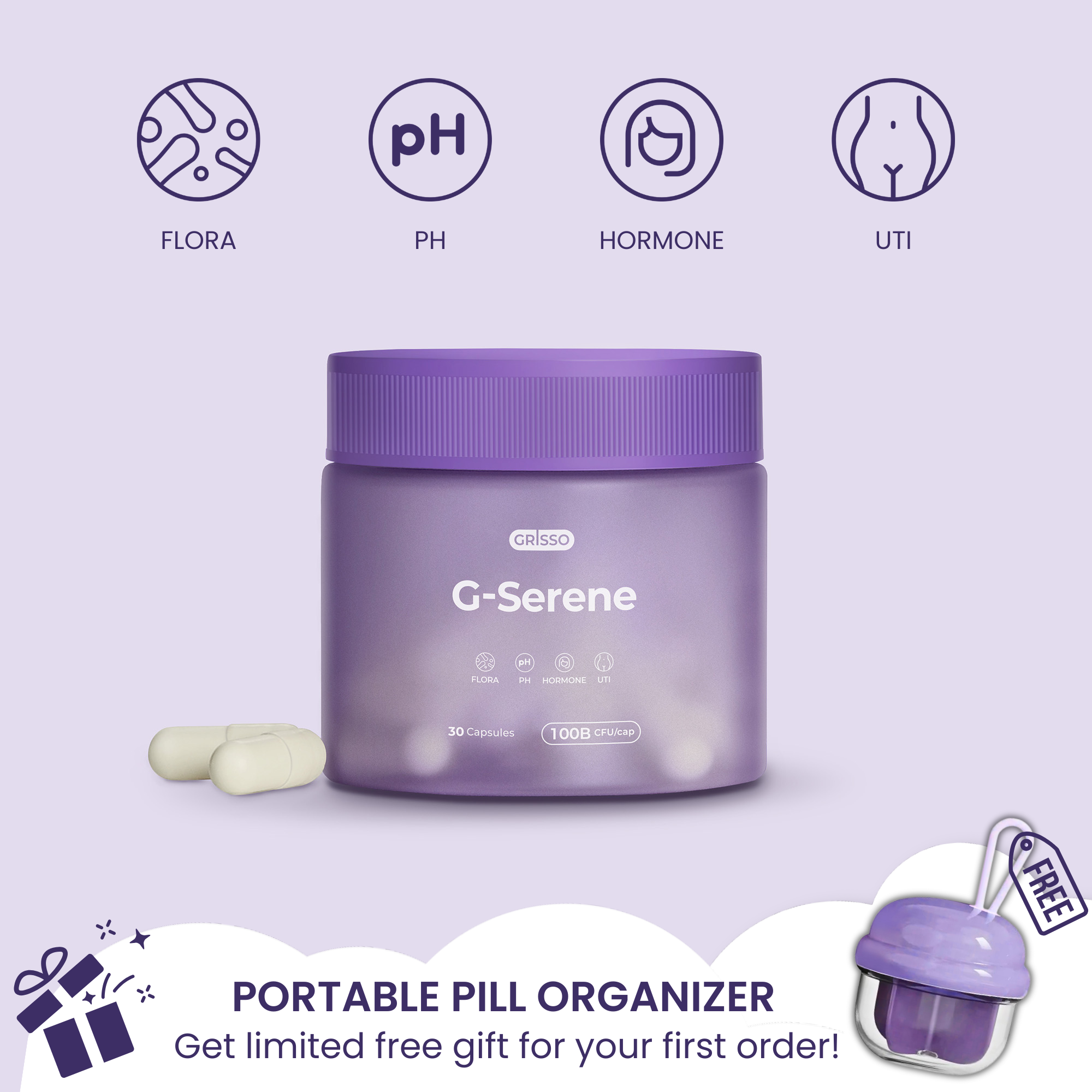
For comprehensive support, our Daily Routine Bundle combines three targeted formulas — gut regularity (G-Sylph), stress support (G-Serein), and women's 4-in-1 (G-Serene) — to address IBS from multiple angles. Use code BLOG10 for 10% off.
IBS Probiotics: Red Flags to Watch For
- "Cure" claims: No probiotic cures IBS. If a product claims to, that's a marketing red flag.
- Proprietary blends without strain names: "Proprietary blend 50 billion CFU" tells you nothing. You need to know exactly which strains are in it.
- No expiration date: Live probiotics degrade over time. A product without an expiration date is suspect.
- Room-temperature storage with no stability data: Most probiotics require refrigeration unless specifically formulated for room-temperature stability (spore-formers are the exception).
The Bottom Line
The "best probiotic for IBS" isn't one universal product — it's the strain that matches your specific symptoms and IBS subtype. However, the research points to several clear conclusions:
- Spore-forming Bacillus coagulans has strong evidence for IBS-related bloating, pain, and bowel irregularity
- High CFU counts (50-100 billion) outperform low doses
- Consistency matters — daily use for 4-8 weeks minimum is needed to evaluate effectiveness
- Strain specificity is non-negotiable — generic "probiotic" supplements are a waste of money for IBS
If you're struggling with IBS symptoms and haven't tried a targeted, high-CFU, spore-forming probiotic, that's the logical starting point based on current evidence.
These statements have not been evaluated by the Food and Drug Administration. This product is not intended to diagnose, treat, cure, or prevent any disease. IBS is a medical condition. Consult your gastroenterologist before starting any supplement, especially if you experience unintended weight loss, blood in stool, or symptoms that disrupt sleep.
References
- McFarland, L.V., et al. (2021). Systematic review of probiotics for IBS. Beneficial Microbes, 12(1), 1-32.
- O'Mahony, L., et al. (2005). Bifidobacterium infantis 35624: A randomized, double-blind, placebo-controlled trial in IBS. Gastroenterology, 128(3), 541-551.
- Honda, H., et al. (2012). Effect of Bacillus coagulans on functional abdominal bloating. Journal of Clinical Biochemistry and Nutrition, 51(2), 110-115.
- Didari, T., et al. (2015). Effectiveness of probiotics in irritable bowel syndrome: Updated systematic review with meta-analysis. World Journal of Gastroenterology, 21(10), 3072-3084.
- Ford, A.C., et al. (2018). Efficacy of prebiotics, probiotics, and synbiotics in irritable bowel syndrome and chronic idiopathic constipation: systematic review and meta-analysis. American Journal of Gastroenterology, 113(10), 1547-1561.
- Harris, L.A., et al. (2019). Bacillus coagulans GBI-30, 6086 improves abdominal pain and bloating in IBS-D. Postgraduate Medicine, 131(6), 397-406.