When Is the Best Time to Take Probiotics? | Grisso
Aug 6, 2026 Grisso Wellness Team"Should I take my probiotic in the morning or at night?"
"With food or on an empty stomach?"
"Does it even matter?"
These are among the most common questions we get at Grisso — and for good reason. Probiotic supplement labels are notoriously vague on this point. Some say "take with meals." Others say "take on an empty stomach." A few say "take before bed."
Who's right? As it turns out, they might all be right — or all wrong — depending on which probiotic strain you're taking.
Here's what the science says about probiotic timing, why it matters more for some strains than others, and the specific recommendation for BC99™ spore-forming probiotics.
The Science of Probiotic Survival and Timing
To understand why timing matters (or doesn't), you need to understand what happens to a probiotic after you swallow it.
The Gastric Acid Factor
Your stomach acid is the single biggest obstacle between a probiotic capsule and your gut. The pH of your stomach fluctuates throughout the day:
| Condition | Stomach pH | Probiotic Survival | |-----------|-----------|-------------------| | Fasting (empty stomach, morning) | 1.5 - 2.0 | Very low for vegetative strains | | After a light meal | 2.5 - 3.5 | Low to moderate | | After a large meal | 3.5 - 5.0 | Moderate to high for vegetative strains | | During sleep (overnight fasting) | 1.0 - 2.0 | Very low for vegetative strains |
For traditional vegetative probiotic strains (Lactobacillus, Bifidobacterium), the timing of your dose matters significantly. Taking them with food — especially a meal containing some fat and protein — raises stomach pH and gives more bacteria a chance to survive.
The Spore-Forming Advantage
Here's where the story changes. If your probiotic contains spore-forming bacteria like Weizmannia coagulans BC99™, the spore coat makes the bacteria naturally resistant to stomach acid — regardless of pH.
This means:
- With food or without? Less important. The spore survives both.
- Morning or night? Less important. The spore survives both.
- Consistency matters more than timing. Taking it at roughly the same time every day is more beneficial than agonizing over the "perfect" time.
The 4 Most Common Timing Strategies (Ranked)
Strategy 1: With Breakfast (Recommended for Most People)
How: Take your probiotic with or immediately after your first meal of the day.
Why it works:
- Food raises stomach pH, which helps even non-spore-forming strains survive
- Morning dosing establishes a consistent daily routine (consistency is key for microbiome health)
- Breakfast typically contains fiber — the food source your new bacteria need to thrive
- Taking it early means any mild adjustment symptoms (gas, bloating) happen during the day rather than disrupting sleep
Best for: Everyone, but especially people who are sensitive to supplements or prone to nighttime digestive discomfort.
Grisso recommendation: This is our default recommendation for all Grisso products. Take one capsule with breakfast, every day.
Strategy 2: With Your Largest Meal
How: Take your probiotic with whichever meal is biggest — for many people, this is dinner.
Why it works:
- A large meal creates the highest stomach pH of the day, maximizing survival for vegetative strains
- The food in your digestive tract provides immediate substrate (fiber, resistant starch) for the probiotic bacteria
- For spore-forming strains, the food isn't necessary for survival but provides the fiber the bacteria need to thrive once they germinate
Best for: People taking non-spore-forming probiotics (traditional Lactobacillus/Bifidobacterium blends), or people whose breakfast is very light.
Strategy 3: Before Bed
How: Take your probiotic 30-60 minutes before sleep, either with a small snack or on an empty stomach.
Why it works:
- Your gut is relatively inactive during sleep, which may allow bacteria more time to colonize without being "washed through" by food and drink
- Some studies suggest gut motility slows during sleep, giving probiotics more contact time with the intestinal wall
- Taking probiotics at night aligns with your body's natural circadian repair cycle
Best for: Spore-forming probiotics (where acid survival isn't an issue) or people who tend to forget morning doses. If you experience any nighttime digestive discomfort, switch to morning.
Strategy 4: On an Empty Stomach (First Thing in the Morning)
How: Take your probiotic 30 minutes before eating or drinking anything.
Why it works:
- An empty stomach means less competition from food for absorption sites
- For spore-forming strains, the acid doesn't matter, so this is safe
Why it might not be ideal:
- For vegetative strains, an empty stomach means maximum acid exposure — the worst possible scenario
- The lack of food means there's no immediate fiber source for the bacteria to feed on once they arrive in the gut
Best for: Spore-forming probiotics only. If you're taking BC99™, this strategy is fine — though we still prefer the "with breakfast" approach for the routine-building and fiber-availability benefits.
What About Taking Probiotics with Other Supplements or Medications?
This is where timing gets more nuanced. Some substances interact with probiotics:
Antibiotics
If you're taking antibiotics, continue taking your probiotic — but space it at least 2-3 hours apart from your antibiotic dose. Antibiotics will kill probiotic bacteria if they're in your gut at the same time. Taking them at different times gives the probiotic a window to transit and colonize.
Antacids and PPIs
Proton pump inhibitors (omeprazole, pantoprazole) and antacids (Tums, Pepto-Bismol) reduce stomach acid. While this might seem helpful for probiotic survival, chronic use of acid-reducing medications has been shown to alter the gut microbiome in negative ways. If you're on these medications long-term, talk to your doctor about probiotic timing.
Coffee and Caffeine
There's no strong evidence that coffee harms probiotics. However, coffee stimulates gut motility — meaning things move through faster. If you're taking a vegetative probiotic, the extra speed could reduce colonization time. For spore-forming strains like BC99™, this isn't a concern.
Other Supplements
Probiotics can generally be taken alongside vitamins, minerals, and other supplements without issues. Some combinations may even be beneficial:
- Prebiotic fiber + probiotics: Synergistic — the fiber feeds the bacteria
- Vitamin D + probiotics: Some research suggests vitamin D supports gut barrier function
- Collagen + probiotics: No known interactions; both support gut lining health
The Grisso Recommendation: Simple and Consistent
Here's our bottom-line advice for all Grisso products:
Take 1 capsule daily, with breakfast.
That's it. Here's why:
- BC99™ spore-forming bacteria survive regardless of stomach acid — so you don't need to stress about exact timing
- Breakfast provides fiber — the food source your probiotic bacteria need to thrive after germinating
- Morning dosing builds a consistent routine — the single most important factor in probiotic effectiveness
- Any mild adjustment symptoms occur during the day — rather than disrupting your sleep
If breakfast doesn't work for your schedule, any consistent daily time is fine. The key word is consistent — your gut microbiome responds better to a regular rhythm than to sporadic dosing at different times.
What If You Miss a Dose?
Don't panic. Don't double up.
If you miss a day, simply resume your normal dose the next day. Missing a single dose won't undo the colonization that's already occurred — your gut bacteria are remarkably resilient. What matters is the long-term pattern, not any individual day.
If you frequently forget, try these habit-building tricks:
- Keep your probiotic bottle next to your coffee maker or toothbrush
- Set a daily phone reminder
- Use a pill organizer with a daily compartment
- Pair it with an existing daily habit (your morning coffee, breakfast, or skincare routine)
The Bottom Line
| Strain Type | Best Time | With Food? | Critical? | |-------------|-----------|------------|-----------| | Spore-forming (BC99™) | Any consistent time | Preferred but not required | No — spores survive acid regardless | | Vegetative (Lacto/Bifido) | With largest meal | Yes, essential | Yes — timing significantly affects survival | | Mixed formulas (G-Serene) | With breakfast | Yes | Moderately — protects the vegetative strains |
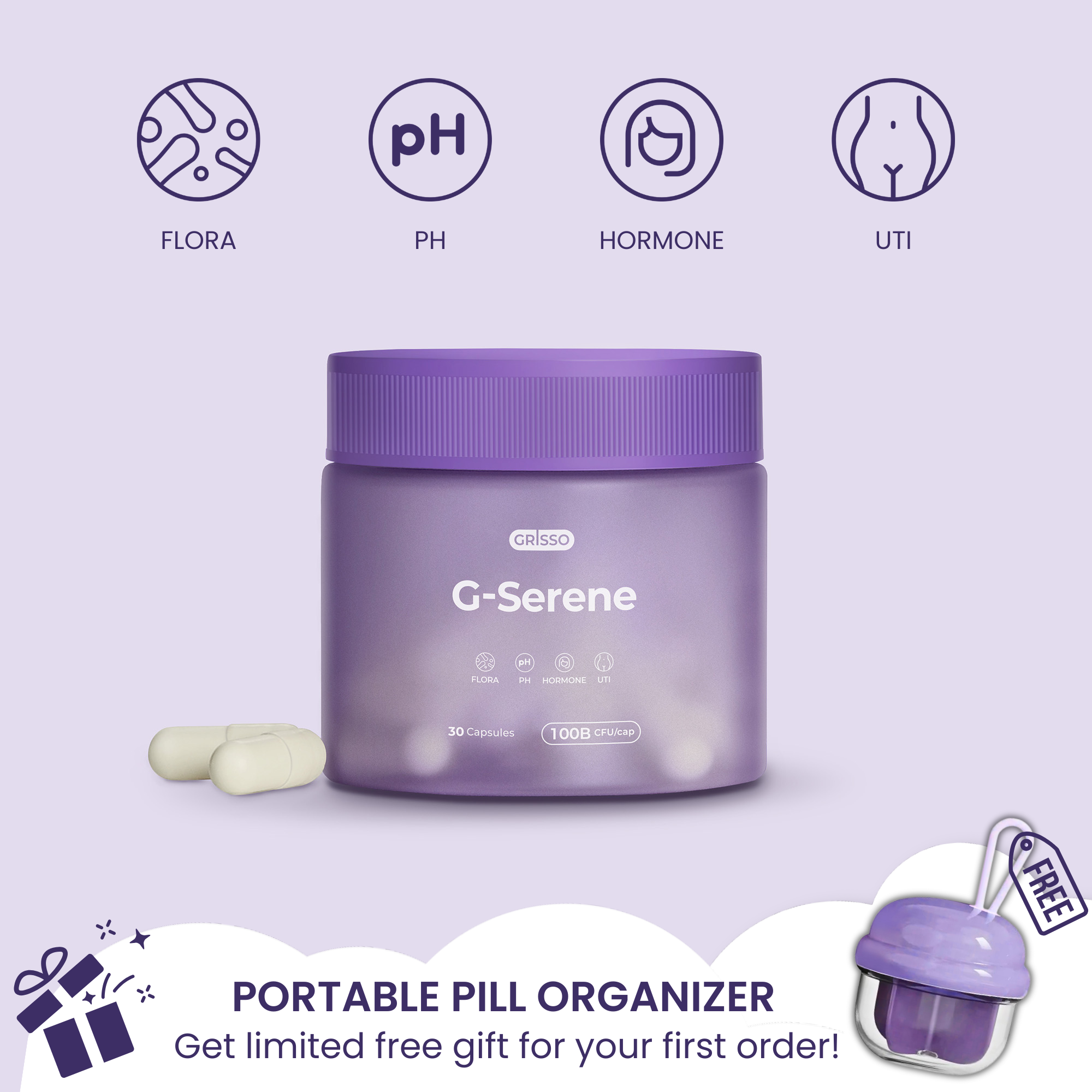
For all Grisso products — G-Serein, G-Serene, G-Sylph, and the Daily Routine Bundle — the recommendation is the same:
One capsule. With breakfast. Every day. Consistency over perfection.
Ready to Start?
Use code BLOG10 for 10% off your first order. Shelf-stable, no refrigeration, 100 Billion CFU of clinically validated BC99™.
👉 Shop All Products | 👉 Start with the Bundle (Save 15%)
These statements have not been evaluated by the Food and Drug Administration. Grisso products are not intended to diagnose, treat, cure, or prevent any disease. Consult your healthcare provider before starting any new supplement, especially if you are taking medications or have a medical condition.